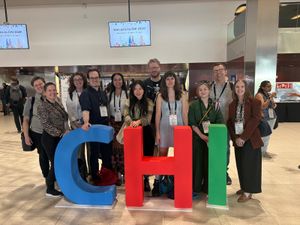
SEURO Project Represented at ACM CHI 2026 in Barcelona
Tue Apr 28 2026
The SEURO Project was represented at the ACM CHI Conference on Human Factors in Computing Systems, held in Barcelona, Spain, from 13 to 17 April 2026. Widely regarded as the world's leading international conference on Human-Computer Interaction, CHI 2026 brought together researchers and practitioners from across the globe to advance knowledge at the intersection of technology and human experience.
Dr. Julie Doyle, Principal Investigator of the SEURO Project at Dundalk Institute of Technology (DkIT), presented a full paper and conducted a workshop, marking a significant contribution from the project to the international research community.
Full Paper: Factors Influencing Digital Health Engagement of Older Adults with Multimorbidity during a Longitudinal Trial
Dr. Doyle presented findings from a longitudinal study examining how and why older adults with multimorbidity engage with digital health self-management technologies over time. Drawing on six months of real-world usage data and qualitative insights gathered through the SEURO Project trial of the ProACT platform, the paper offers a nuanced analysis of the factors that shape engagement trajectories. Key findings highlight the dynamic and highly individualised nature of engagement, influenced by health status, life context, motivation, and the availability of clinical support.
The full paper is available to read here:
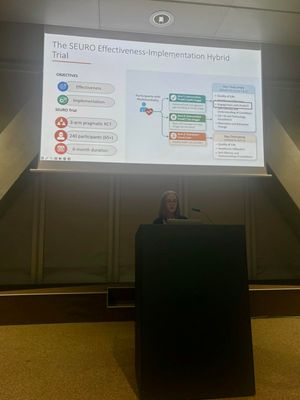
Workshop: Rethinking Engagement in Longitudinal Digital Health: A Use Case from older Adults with Multimorbidity
As part of the workshop, Dr. Doyle contributed a use case titled 'Rethinking Engagement in Longitudinal Digital Health: A Use Case from Older Adults with Multimorbidity', drawing on a decade of experience designing, deploying, and trialling the ProACT platform with older adults living with multimorbidity across Europe. The use case challenged the common assumption that engagement means frequent, consistent use, proposing instead that meaningful engagement is episodic, adaptive, and purpose-driven, shaped by health status, life context, and the availability of clinical support such as triage nurses. It also raised important open questions for the research community around how to operationalise episodic engagement, the role of human support in sustaining engagement, and how evaluation frameworks should account for user-led reductions in system use.